
+7
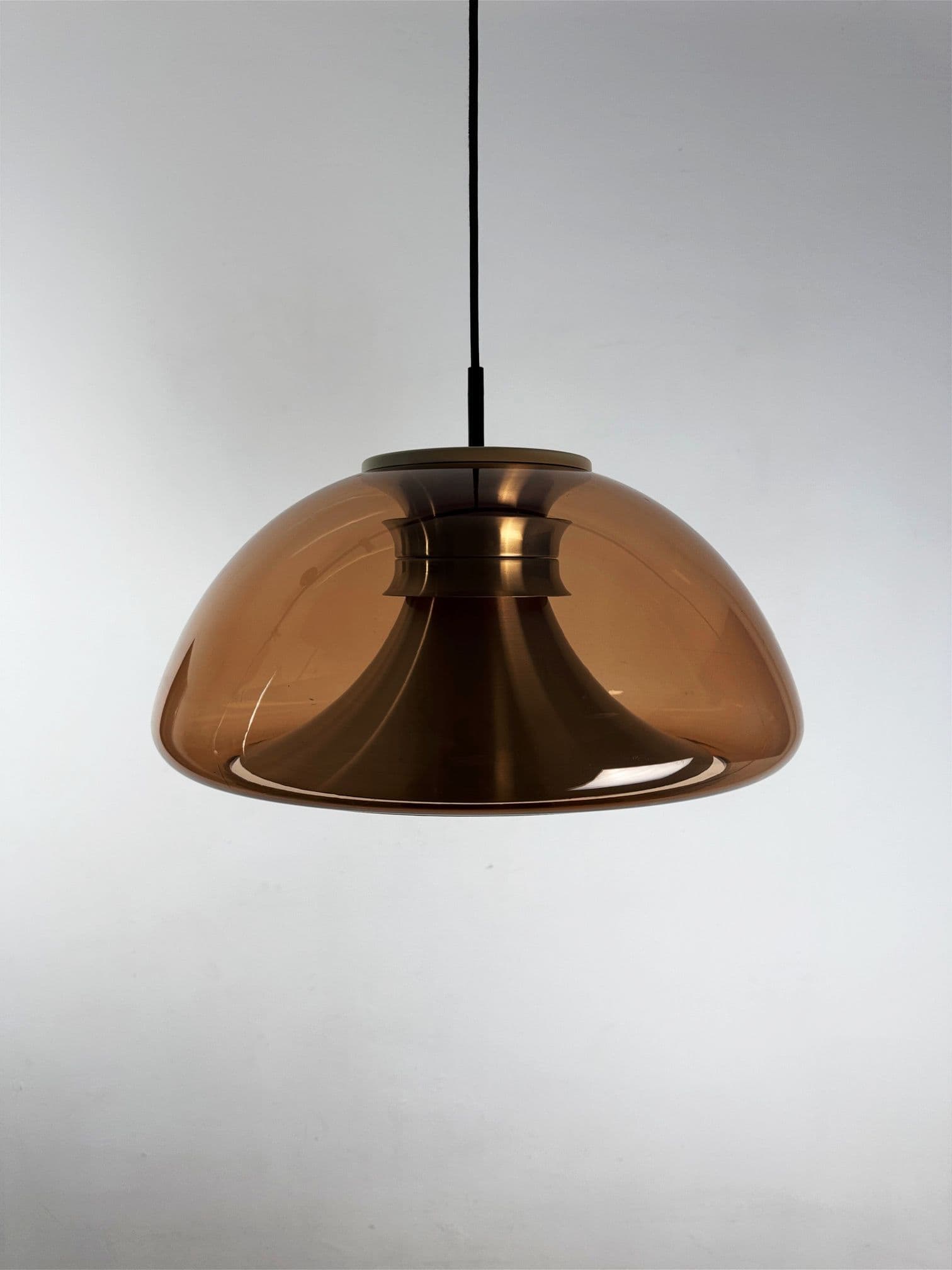
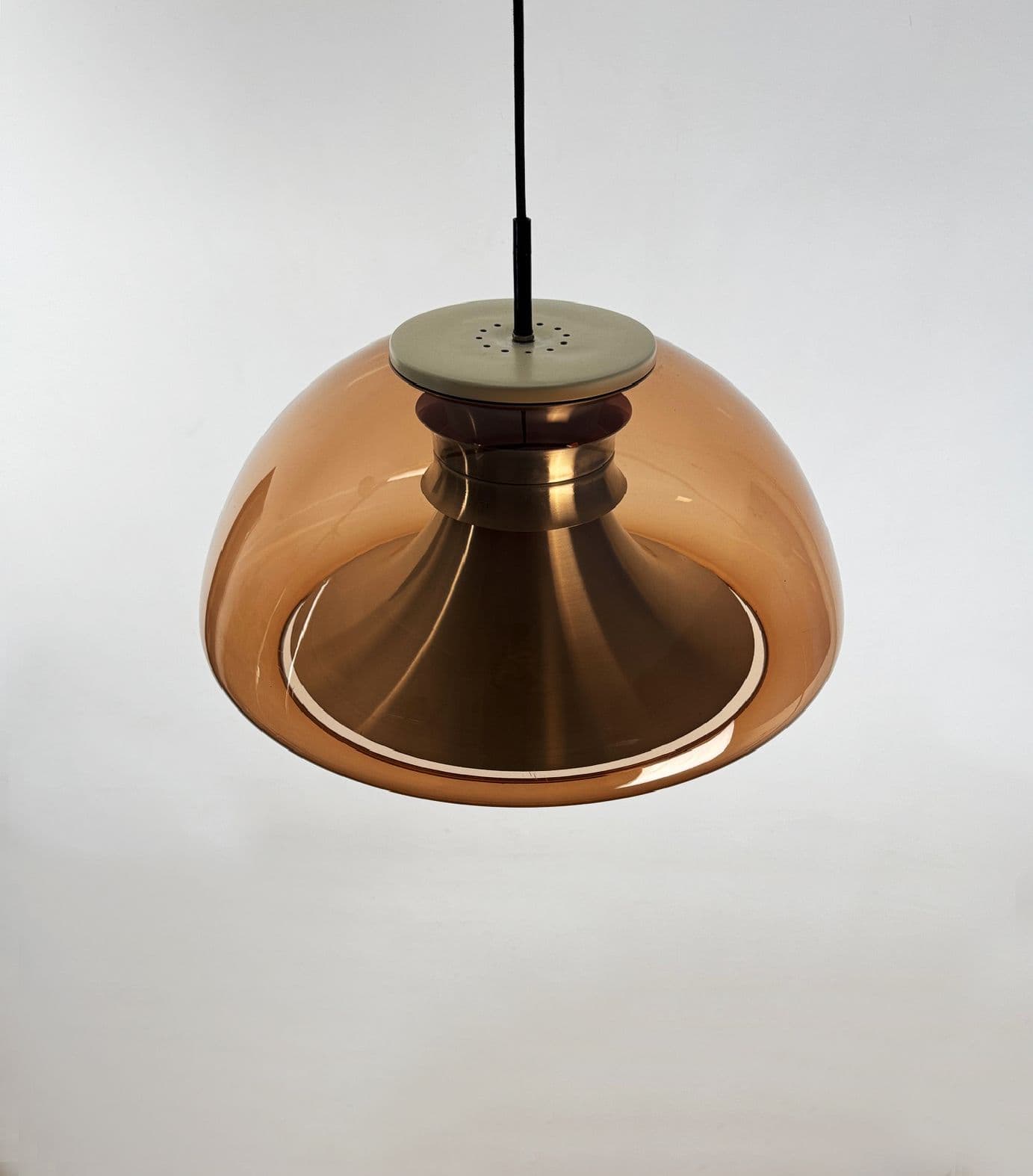
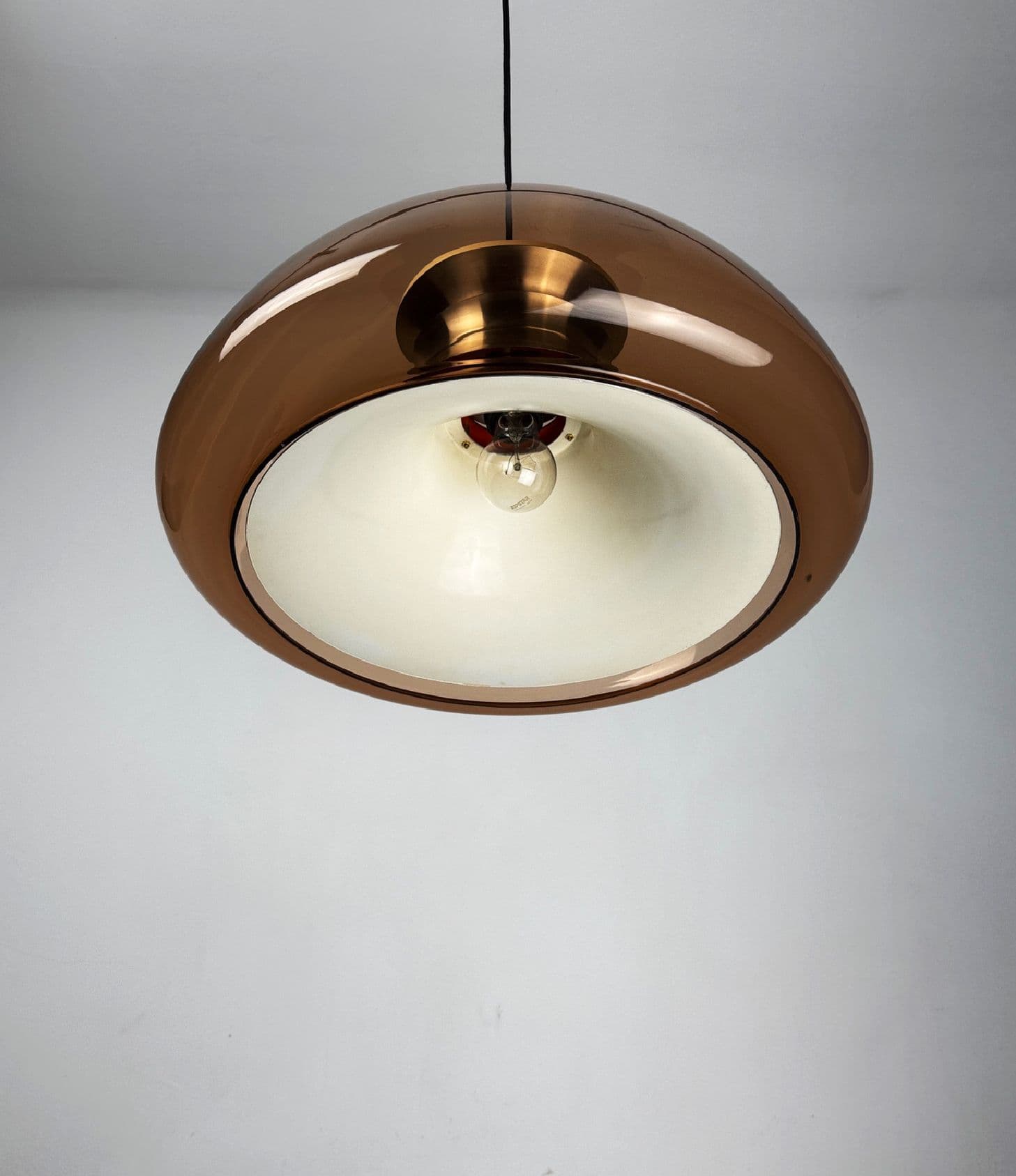
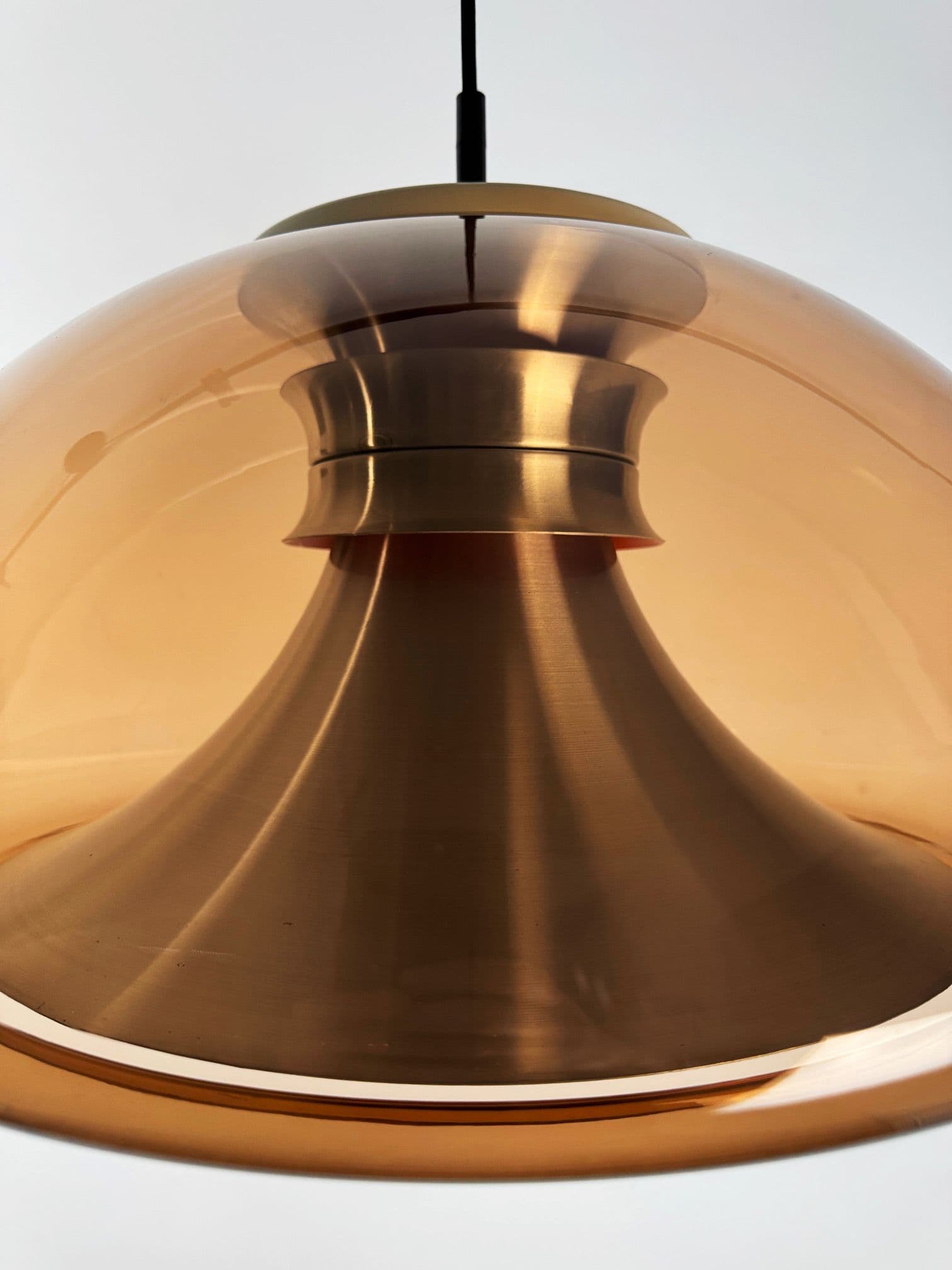
Herda space age pendant lamp – smoked ad white methacrylate & metal, 1970s Amsterdam
250€
Material: plastic
Period: 70s
Size: Height: 25 cm - Width: 50 cm
Weight: 1.5kg
This product is an original vintage item so there are signs of wear from use.
Price does NOT include delivery.
More about Herda Verlichting BV

Herda Verlichting: A Landmark of 20th-Century Dutch LightingHerda Verlichting, founded in 1946 in Amsterdam–Duivendrecht, became one of the most influential lighting manufacturers in the Netherlands. Owned by the Daniels family, the company emerged in the immediate postwar years and evolved from producing emergency stoves during the Hunger Winter to becoming the leading domestic lighting brand in the country.Origins and IdentityHerda’s story is rooted in postwar ingenuity. Brothers Frans, Henk and Rob Daniels, later joined by two more siblings, initially crafted small emergency stoves made from cookie tins dropped by Allied forces, creatively bypassing material shortages.As demand for stoves declined, the company shifted naturally toward lighting, selling early pieces through key retailers such as De Bijenkorf in Amsterdam.The name “Herda” combines Herwaarden—the urban planner who secured the brothers’ first factory permit—and Daniels.Design Style and PhilosophyHerda embraced the motto “Harmonieus in sfeerlicht” (“harmonious in ambient light”), producing lighting rooted in warmth, functionality and simplicity.Their design approach was shaped by:in-house designers Jaap Tiepel, Dirk Heyman and Margo van Dijk,and contributions from Willem van Oyen Sr., celebrated for his designs for Raak Amsterdam.Herda lamps reveal a clear mid-century Dutch identity:soft, domestic forms,opal glass and acrylic diffusers,clean metal structures,and a balance between modern design and industrial efficiency.Growth and ExpansionAfter the construction of their new factory in 1946, Herda expanded rapidly.By the early 1960s, the company reached an extraordinary milestone:95% of the Dutch lighting market, employing more than 350 people.Distribution extended nationally—with depots in Tilburg, Oosterwolde, Borne and Nuth—and internationally through the Belgian lighting giant Massive, which also distributed brands such as Peill & Putzler.Challenges and ClosureHerda’s path was not without setbacks:a warehouse fire in 1968,a plagiarism lawsuit in 1973 filed by Atelier Artiforte,and the economic impact of the late-1970s oil crisis.Market pressure led to closures such as the Borne warehouse in 1981, and ultimately, Herda Verlichting was declared bankrupt in 1997.LegacyToday, Herda lamps are highly sought-after in the vintage lighting market. Their floor lamps, wall lights, pendants and ceiling fixtures embody the essence of mid-century Dutch design—honest, atmospheric, functional and full of character.
About Herda Verlichting BV